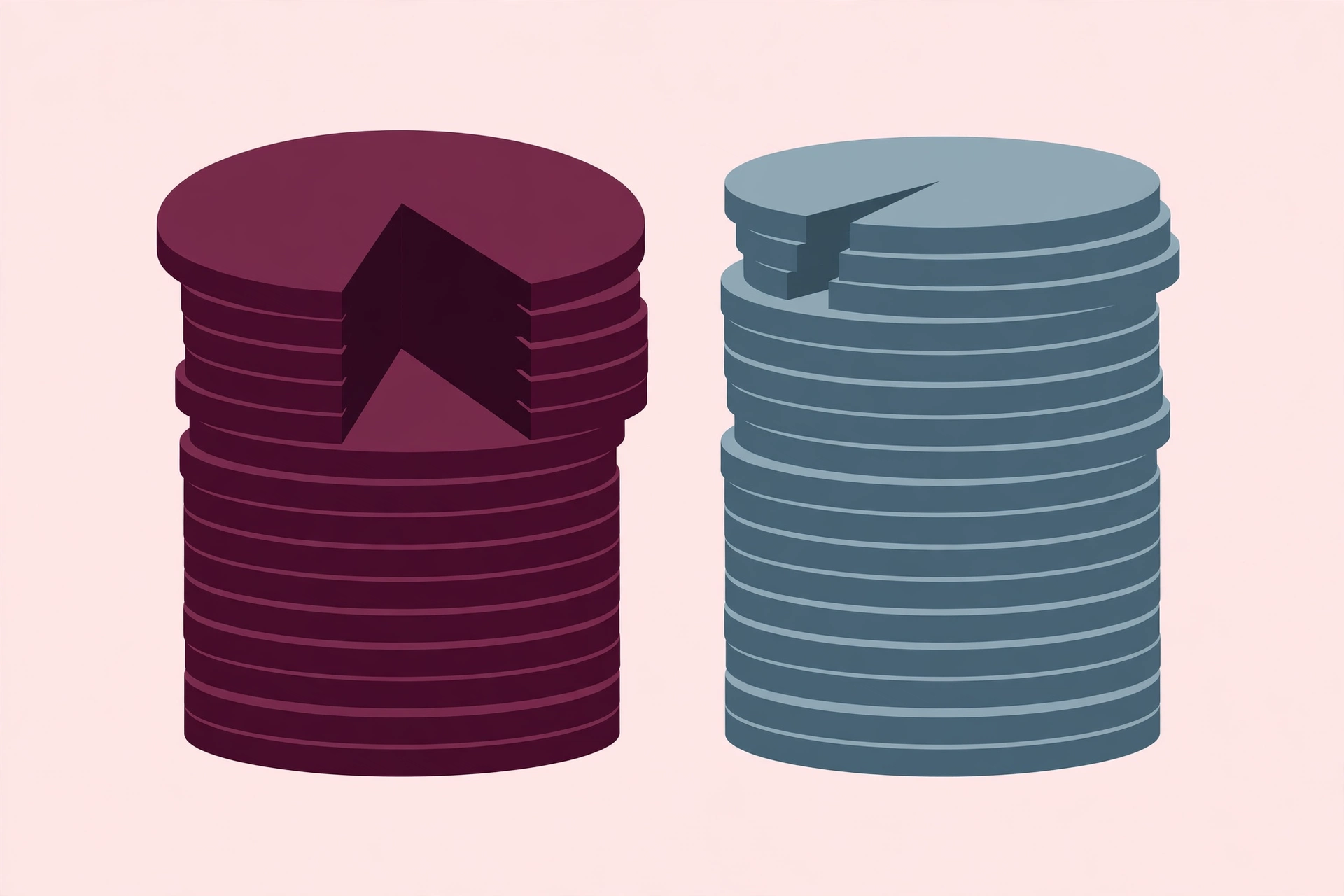
In Canada, not all investment income is taxed the same way. Two dollars of investment income can leave you with very different tax bills depending on whether those dollars arrived as interest or as dividends. Here is the difference, in plain language.
Interest income: fully taxable
Interest — from a savings account, a GIC, or a bond — is fully taxable. Every dollar of interest is added to your income and taxed at your marginal tax rate. Your marginal tax rate is simply the tax rate on your next dollar of income, and it depends on where you live and how much you already earn.
Dividend income: a tax credit softens the bill
Dividends from Canadian companies get special treatment through the dividend tax credit. Here is the rough idea: the company already paid tax on its profits before paying you a dividend, so the tax system gives you a credit to avoid taxing the same money twice.
There are two kinds, and the difference matters:
- Eligible dividends — usually from large public companies. These get the bigger tax credit and the lower tax rate.
- Non-eligible dividends — usually from small private companies, including many small businesses. These get a smaller credit and are taxed at a higher rate than eligible dividends.
What the difference looks like in dollars
Tax rates change by province and by income level, so any example has to name its province and year. Using Ontario’s top tax bracket on 2025 rates (Baker Tilly’s 2025 Ontario budget summary):
- $1,000 of interest income would draw about $535 in tax.
- $1,000 of eligible dividends would draw about $393 in tax.
That is a gap of roughly $142 on every $1,000 — simply because of how the income is classified. For comparison, non-eligible dividends in the same Ontario top bracket would draw about $477 per $1,000: still less than interest, but much closer to it.
For completeness, capital gains sit in their own category: only 50% of a capital gain counts as taxable income. (A proposed increase to that 50% inclusion rate was cancelled in 2025, so the 50% rule continues.)
So which is better?
Dividends are usually more tax-efficient than interest in a non-registered account — money held outside your TFSA or RRSP. But the “best” choice always depends on your own situation: your province, your income level, and your goals. Chasing the lowest tax rate is not a strategy on its own; the investment still has to be a good one.
And one thing that never changes: inside a TFSA or RRSP, this whole comparison disappears, because those accounts shelter your investment income from yearly tax entirely.
Want help figuring out which kind of income fits your situation best? Visit kwicoaching.com and use the contact form to ask about coaching.
Disclaimer: This post is general education only. It is not tax or financial advice, and it is not a recommendation to buy or sell any security. Tax rates vary by province and change over time — check the current rates for your province or speak with a qualified tax professional.